
The mechanical engineer in me says all of your cracks are related. The pinion race takes half of the load from the drive train. The crack probably caused a lot of vibrations that caused your flywheel crack. I’d looked at your drive side race and case as well. My guess is that it’s at least out of round or cracked too.
The welds might have been a last ditch effort to save the engine.
If you decide to weld it back up you’ll need to come up with a way to keep the drive race and pinion race aligned. Welding runs the risk of warping the case. You can’t line bore it because the pinion side is closed.
Sorry man,
Dana
-
I cant say how important that flange in the pinion housing is but I have a few later chief cases with similar cracking,one down to the scraper hole.For me these case are beyond reasonable repair so they were replaced.
I would be looking for new cases or case if I were you but your 101 is more rare than later chiefs .
I would pull that front cam bushing suspecting the crack continues into its bore.
Good luck
TomLeave a comment:
-
closer inspection shows that the repair weld on the flywheel side of the case is trouble, a crack has formed again:
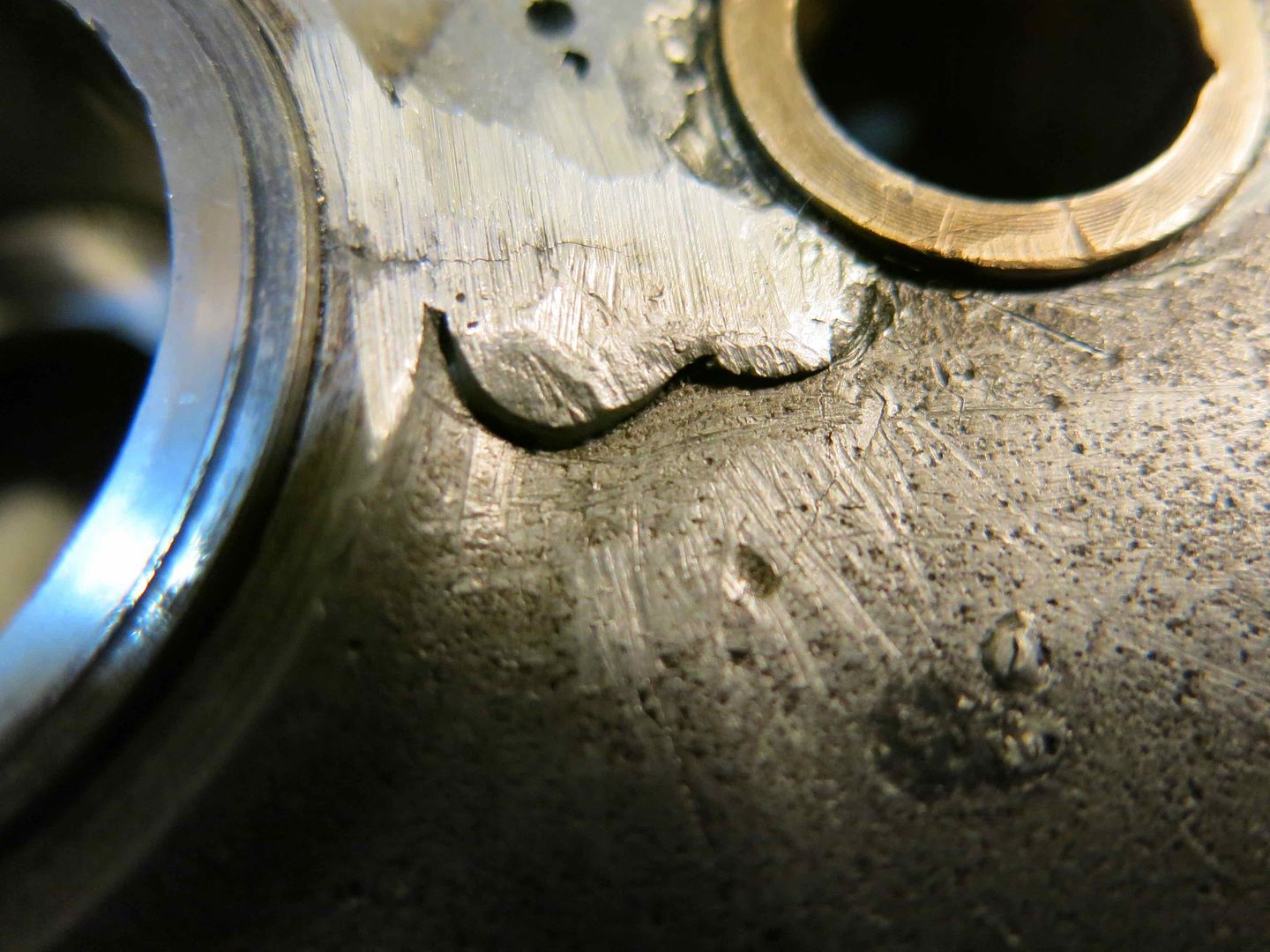
I dropped the case off with a fellow whose business is welding aluminum almost exclusively, we inspected it together and he didn't say it was a lost cause ...so I've got my fingers crossed he can make a long lasting repair.Leave a comment:
-
Just start a new thread on the forum, Mick!Originally posted by aumick10 View Post
Hopefully others know better than I, and certainly others will be curious, sooner or later...
Looking forward to it,
....Cotten
PS: If it saw duty, it sure as hell was practical!
PPS: Who, 'back in the day', was so skilled as to weld aluminum, as well as cast iron?
Awesome.Last edited by T. Cotten; 04-30-2020, 01:40 PM.Leave a comment:
-
Here's one more for today. The more you scrub the more you find. I had seen a weld inside on the flywheel side of the case:
.jpg)
But I hadn't noticed the crack until I started to scrub on the cam side of the case:
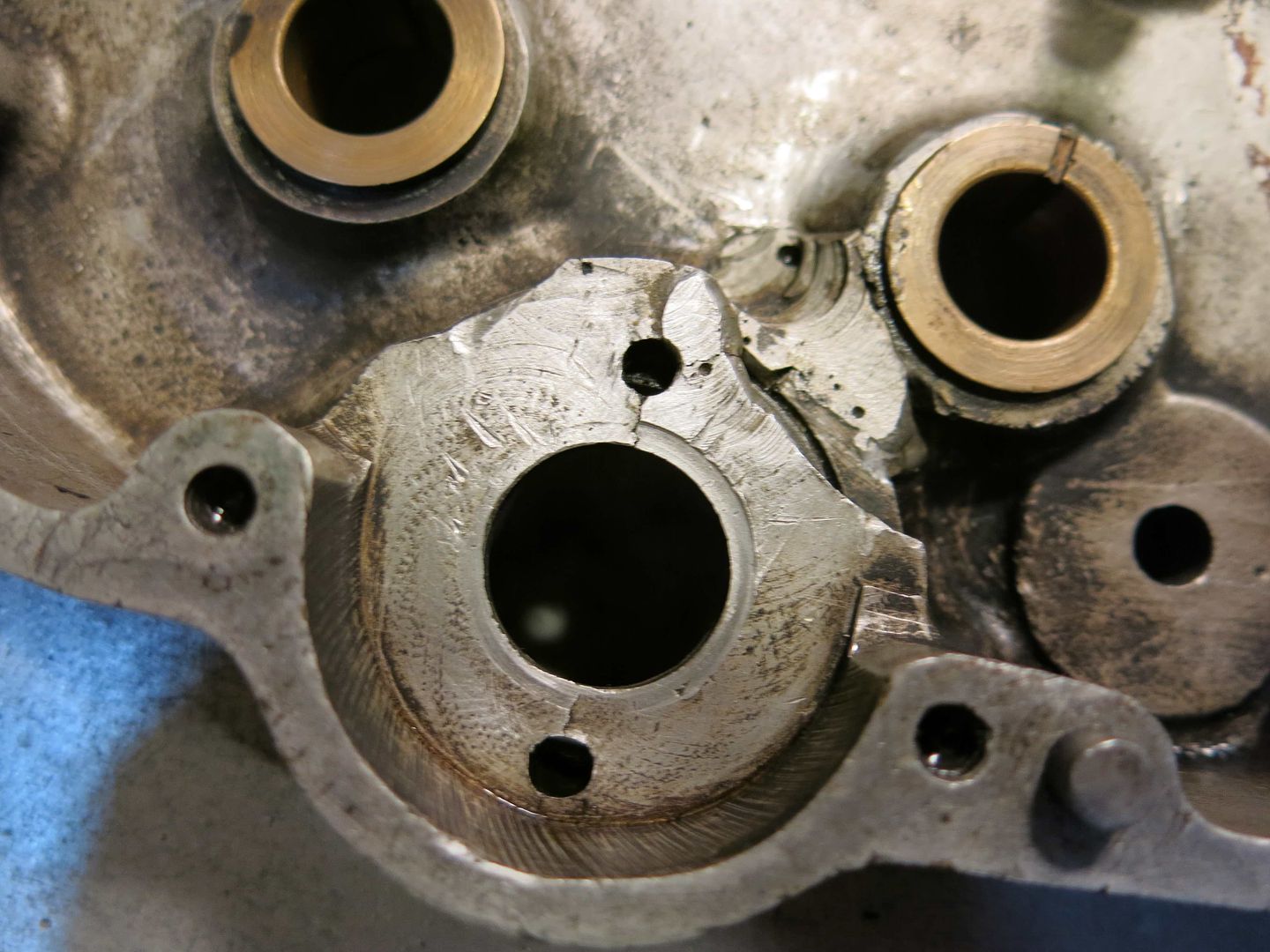
So there was a big crack in the case at one time between the bushing hole for the front cylinder cam to the pinion shaft hole. Looks like the crack was welded up, but what I can't be sure of is whether or not the small cracks in the thin flange of the pinon shaft bearing hole came later or happened at the same time. I don't think that flange carries any force, except maybe there's some thrust force from the pinion shaft bearing? It's a thin aluminum flange, part of the casting....how important is it and should it be fixed?Leave a comment:
-
While we're on the topic of "non-standard" repairs, when I first got this motor I noticed what looked like a copper rivet head on the side of the drive side case:
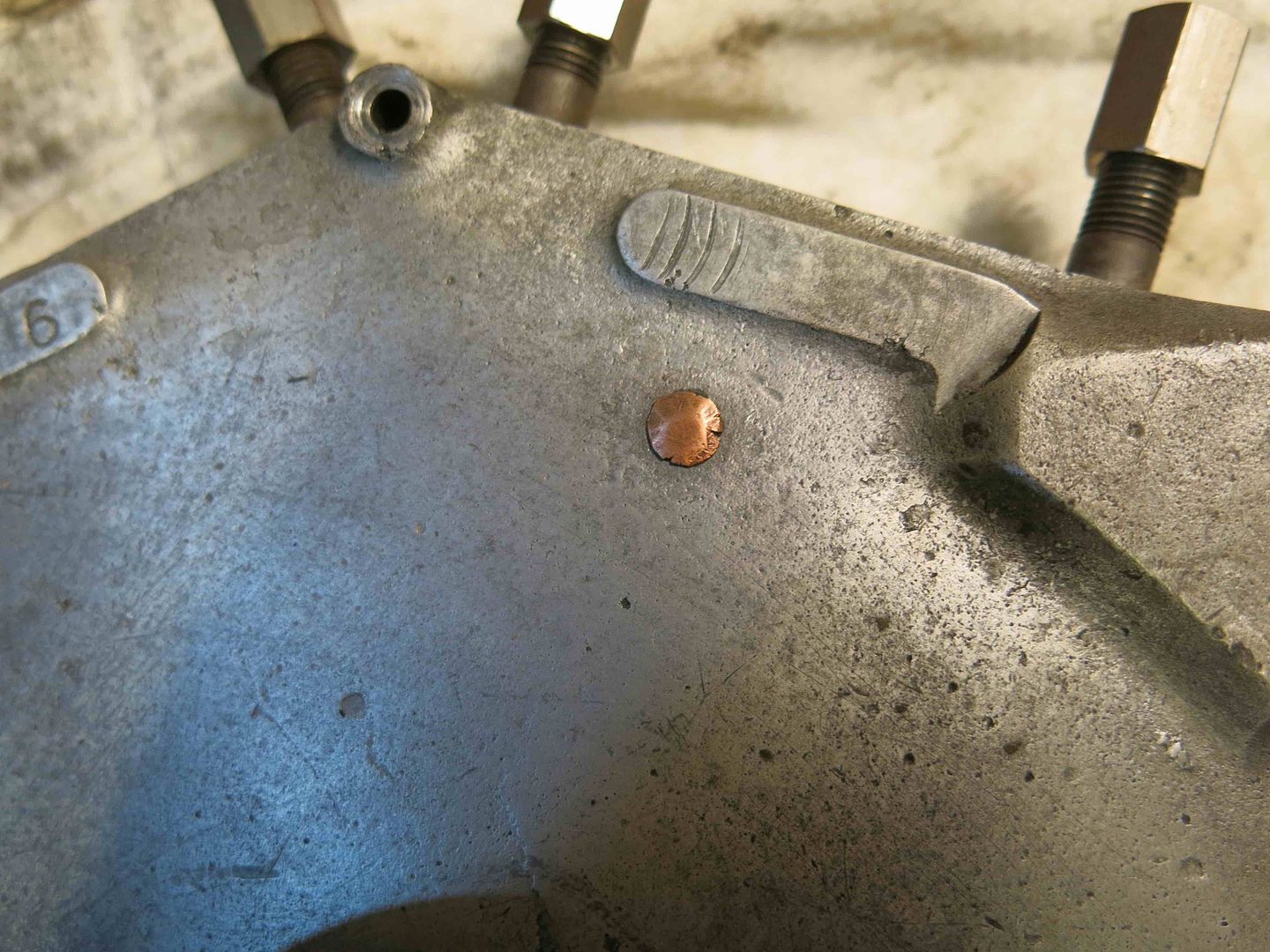
I didn't know what it was for until I pulled the cylinders. The rear baffles had been broken out at some point so someone replaced them with copper plates!
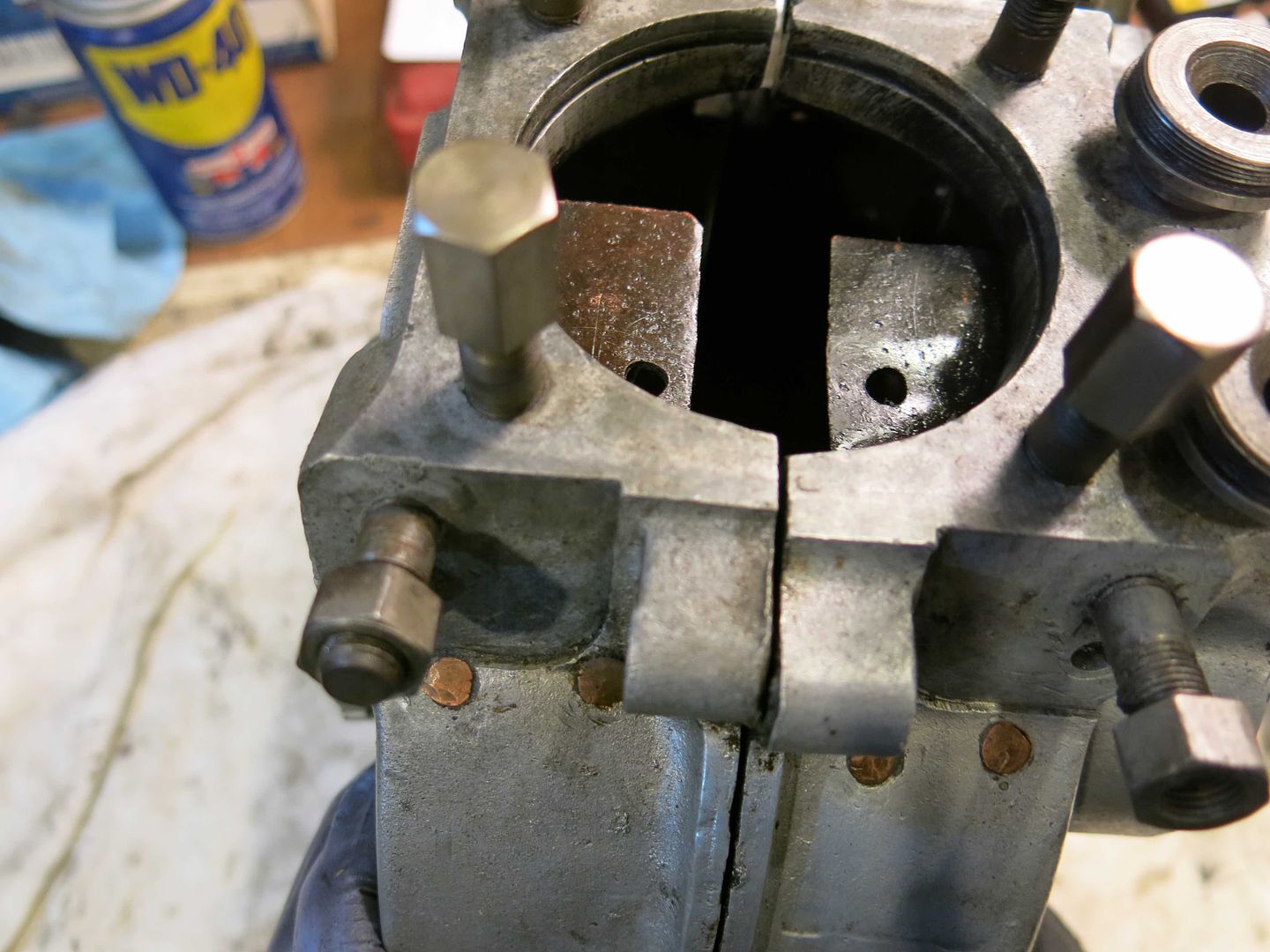
They appear to be fully functional and none of the exterior rivet heads showed any evidence of leakage. As long as there's room in there for the flywheels, it works!
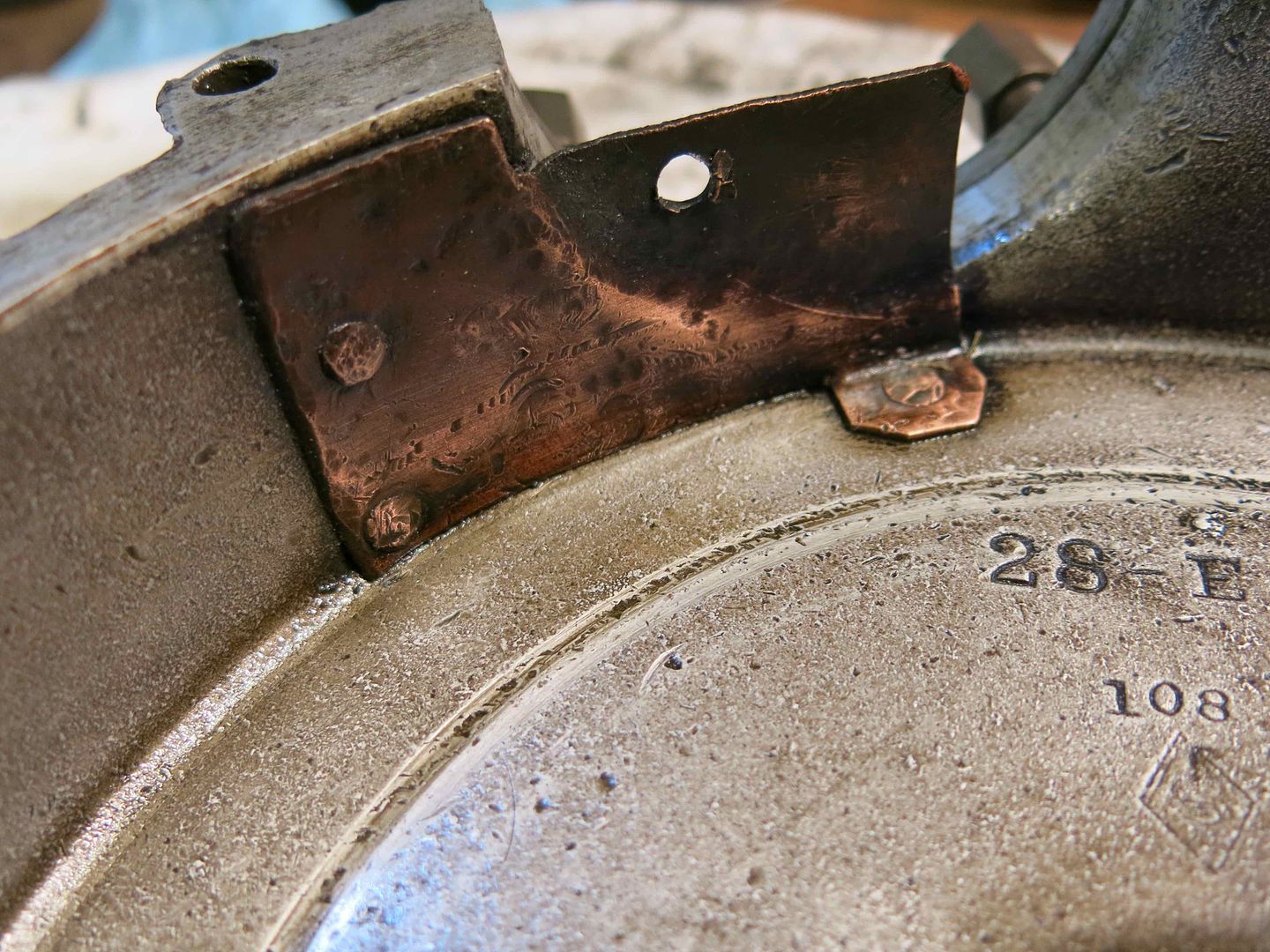
I think it adds character to this motor as well as the "fingerprints" of someone clever enough to replace the baffles with materials at hand.Leave a comment:
-
I wish I could smell the welds, Harry!
Can you scrape and listen to them and tell us what you might guess is the 'filler rod'?
Just getting something to stick is a trick.
And 'slag happens'.
....CottenLeave a comment:
-
That brass shim is remarkable, and shows evidence of how resourceful our forefathers were. I have to say it again, Harry; you take the best pictures, and present such useful documents. And, that reminds me of another story some people at this forum dislike; but I think add character to our grand hobby. I recall a story told to me by Bud Cox at the old Howard Johnson's meet in Orlando. He told of a mechanically minded young man in Kansas who owned a Model T. It had a lot of miles on it, and was nearly worn out. He was out in the middle of nowhere when he could tell a main bearing was gone. He got the pan off, and had correctly diagnosed the problem. He made a new bearing by cutting off some of his leather belt, and trimming it with his pocket knife and re-installing it on the crankshaft. Not only did it get him home, but ran better than before so he did nothing more. He drove the Model T until he was drafted into WW2 and sold it to a neighbor farmer. He survived the war and returned home. Later he met the farmer he sold the Model T to. The farmer said the car ran good all through the war, but he said the rear main bearing was worn out and he couldn't find anyone that knew where he could get a new leather main bearing.Leave a comment:
-
Cotten, indeed a thin brass wrap in the taper, not a bushing, it was cut to size and wrapped end to end in there. But you wouldn’t have known it the way that taper held the pin...came out just as hard as the other one!Originally posted by T. Cotten View Post
I once heard about a fellow who used straw to replace a head gasket....guess you do what you have to do!Leave a comment:
-
Dana, that’s an awesome offer, thank-you! And I hadn’t seen your blog either, the details on the flywheel assembly you did are outstanding!!Originally posted by d_lasher View Post
I’m keeping this engine as it was made, that is 37 c.i. Most of the 1928+ Scout motors in North America were 45 c.i. with a longer stroke, so I’m guessing your flywheels are the same.... and for a 45, and so they likely won’t work in my 37, but really, thanks for the offer!Last edited by pisten-bully; 04-28-2020, 06:24 PM.Leave a comment:
-
I have a door-stop that looks better, Harry!
All the T&O wheels I 'fondled' were delightful, the easiest to 'true' of all.
(Disclaimer: That was many years ago, and all 'brand x' replacements...)
....Cotten
PS: Sweet cheeses, Harry!
Is that brass crammed into the taper?
Obviously these cobbles put it back in service. We should learn from that, even though today we would never be so brave, nor so resourceful. Consider welding cast iron in the first place...
Your doorstop is better than mine, Harry!Last edited by T. Cotten; 04-28-2020, 03:08 PM.Leave a comment:
-
Check out my post about the t and o flywheels, https://www.thecastlehillgarage.com/...ways-something. Other then the oil way drilled on the wrong side I had good luck with them.
I still have my original flywheels, let me know if you want them, it’d just be shipping.Leave a comment:


Leave a comment: