If that one was 'new', Harry,
What are the chances of a 'good' new one?
Beware of some that are almost unuseable,
Like this mess that wouldn't even accept the needle:
CRAPLEVR.JPG
Or this cast one,
castLVR.jpg
Or this machined one.
cnclvr.JPG
....Cotten
PS:
Its been over a decade, but the last decent levers I bought came from Gary Stark, but even those needed re-working of both ends, and the pivot bore, before they came up to my standards.
Since everything needed a re-work, I usually just re-used the customer's OEM, and saved him money.
-
...just a follow up, I rebuilt the 741-1 six years ago for my 101 Scout and finally got to use it last week. The 101 started and ran, several times in fact, but it was particularly finicky to dial in...and so I pulled the bowl to check the float level. I immediately discovered a piece of brass in the bottom of the bowl. looked like one of the fingers from the float lever:
IMG_2476.jpeg
...and sure enough, the middle finger (seems appropriate, right?) was missing:
IMG_2478.jpeg
It was new when installed and I don't recall having to do a lot of bending to adjust the float level, and I can't think of anything else that might have caused that finger to break! At any rate, I'll find a new one (Greer's is out of stock) and hope that makes the tuning fall in line!
Leave a comment:
-
Me neither, Kitabel!Originally posted by kitabel View Post
But we do know they are very forgiving, otherwise they would never have gotten so badly worn.
This 'daylight' is the combination of both of a worn disc (first attachment) or under-sized (common for NOS "seconds" and repop) discs, plus the groove worn into the body of the carb (second attachment).
Even a disc perfectly fitted to the overall bore will show daylight at the 'eyebrow' of wear, and not direct air in and out of the bleeds ('transition holes') as designed, especially when the wear extends all the way to the bleeds themselves (third attachment).
So its a matter of how well you want the machine to tune, and perform.
My personal philosophy is that only a ""blue-printed"" carb will be 'all that it can be', and perhaps even better than the average production carb at that.
(This allowed me to offer the service successfully for many, many years, without any practical means of testing. A worn carb would be a liability.)
Does the rider want the machine to be all it can be, or just 'run'?
....Cotten
PS: Even properly torquing the carb to the manifold changes the bore slightly where a DLX/L&L throttledisc should "close". Graciously, it does not operate "closed", although I machined them torqued as if it did.Last edited by T. Cotten; 05-12-2020, 02:43 PM.Leave a comment:
-
With sufficient air leakage from the throttle disc's periphery, the disc must be closed tighter than spec to keep idle speed under control.
This means that the disc position may place both the idle and transition holes on its atmospheric side (rather than split them as intended).
Is the light showing in the photo enough to do that? I don't know.Leave a comment:
-
Your 'throttle arm' is Schebler too, Harry!
Although a little longer, I'm not sure if any of their shafts ever filled the taller 'arms', actually.
Greer's knobs are 'signature', but certainly some of the best readily available.
(I like Carl's LS knobs, too.)
You will want a simple lock washer rather than a flat under the chokeshaft nut.
I'd find a smaller washer for under the cable swivel too, but only because I must.
The fat LS spring collar is actually 'correct' for '41-'42!
I have no clue why, as the rest were thin (until the HD OHV productions).
....CottenLeave a comment:
-
High speed needle:
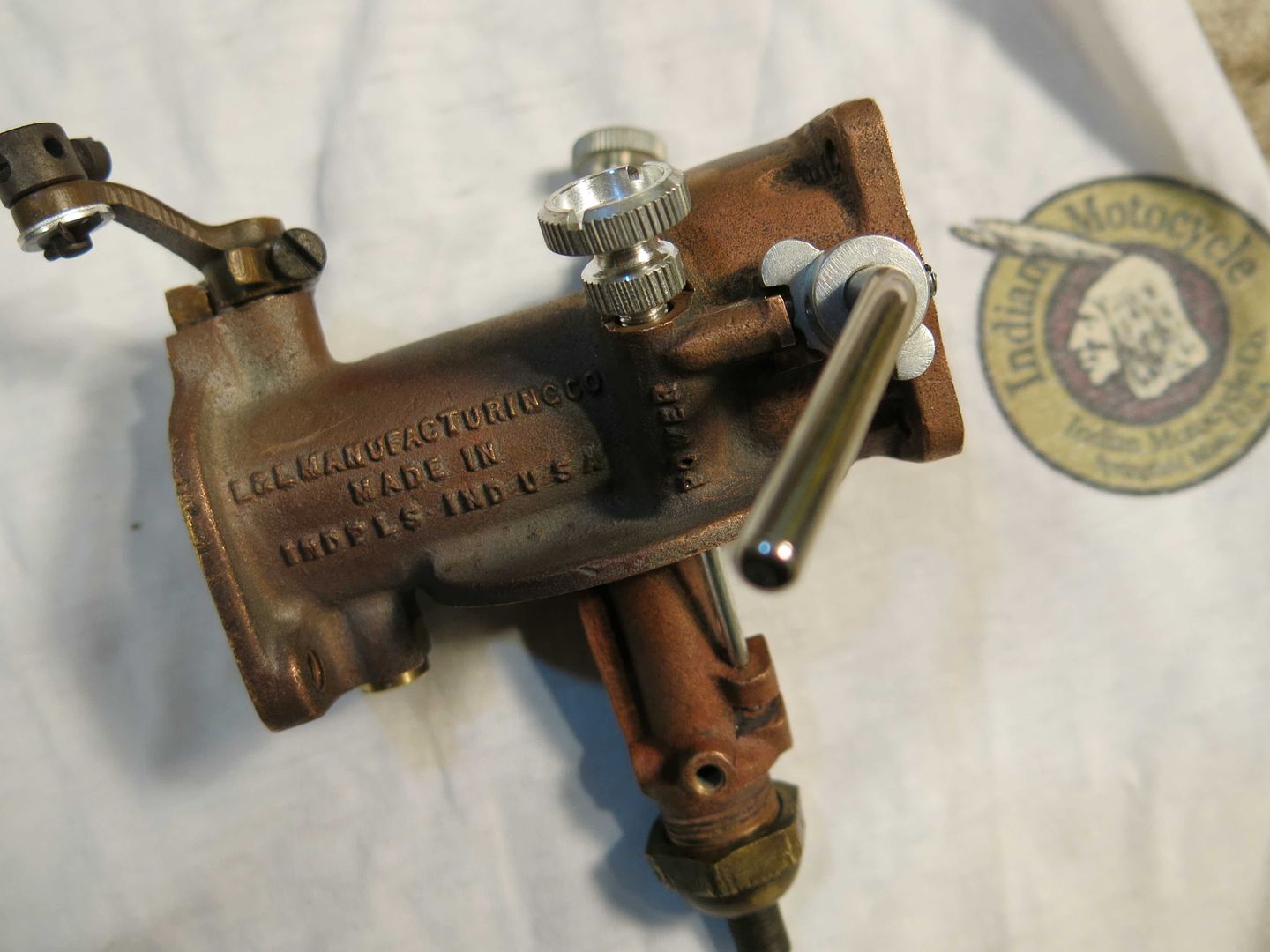
Low speed side:

So pretty much just install the plugs then mount the bowl with float.
I guess since this was sort of a "Frankencarb" with Schebler bowl and needles originally, I'm not surprised the throttle arm doesn't fit all the way on the throttle shaft, but it was like that before I took it all apart so hopefully it won't cause any problems! Thanks for following, especially thanks to Cotten!
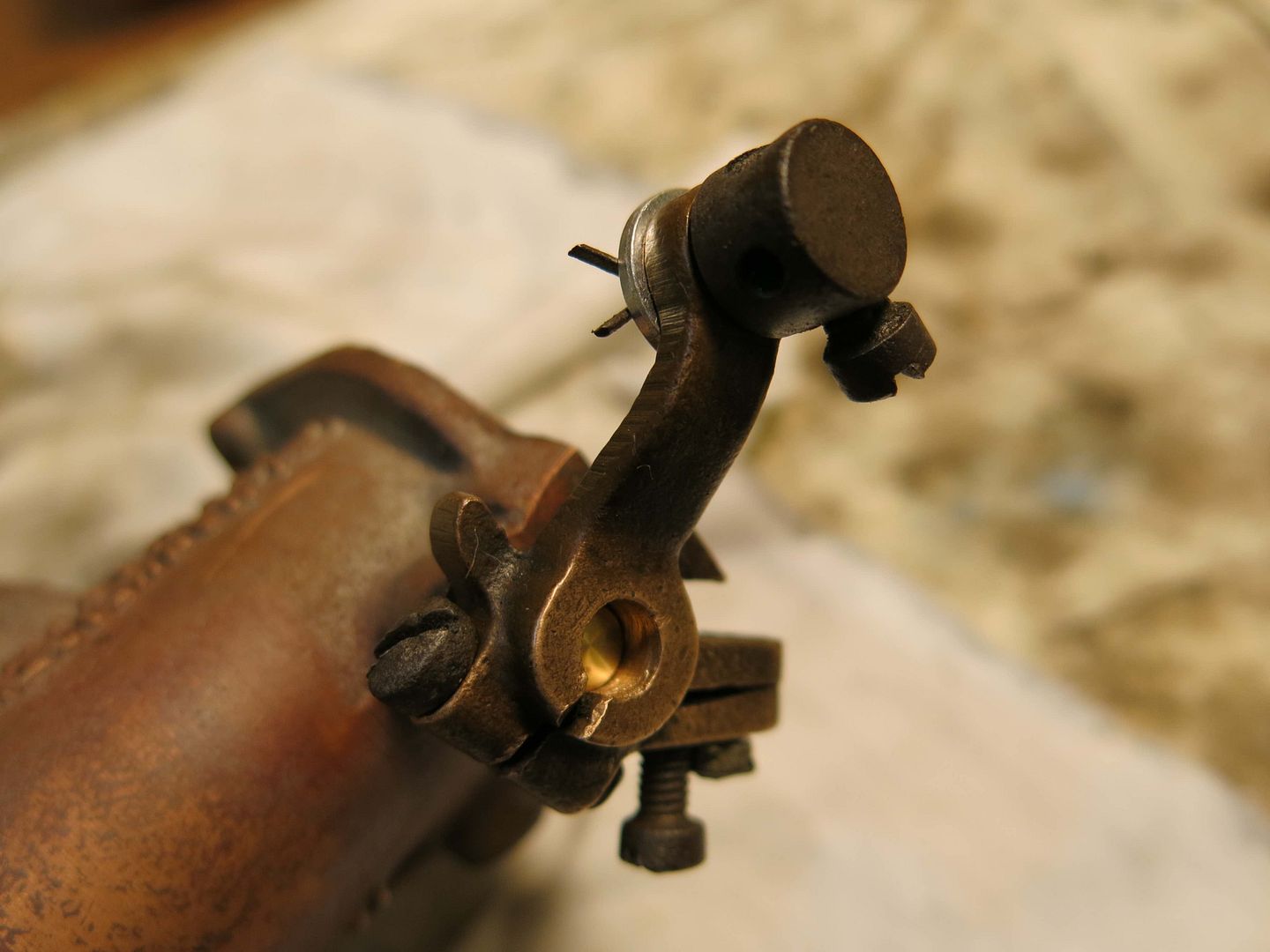
Leave a comment:
-
That's a lot of 'daylight', Harry!
But it will probably 'run'.
Only professionals must go the extra mile.
...CottenLeave a comment:
-
The throttle disc I kept from the old carburetor, it does show some light but I'm hoping it's a good fit still:

I am curious about the throttle shaft however, I bought a new one and it doesn't fit deep into the linkage on top of the carburetor:
I never noticed how the old one fit, but it's the same length:
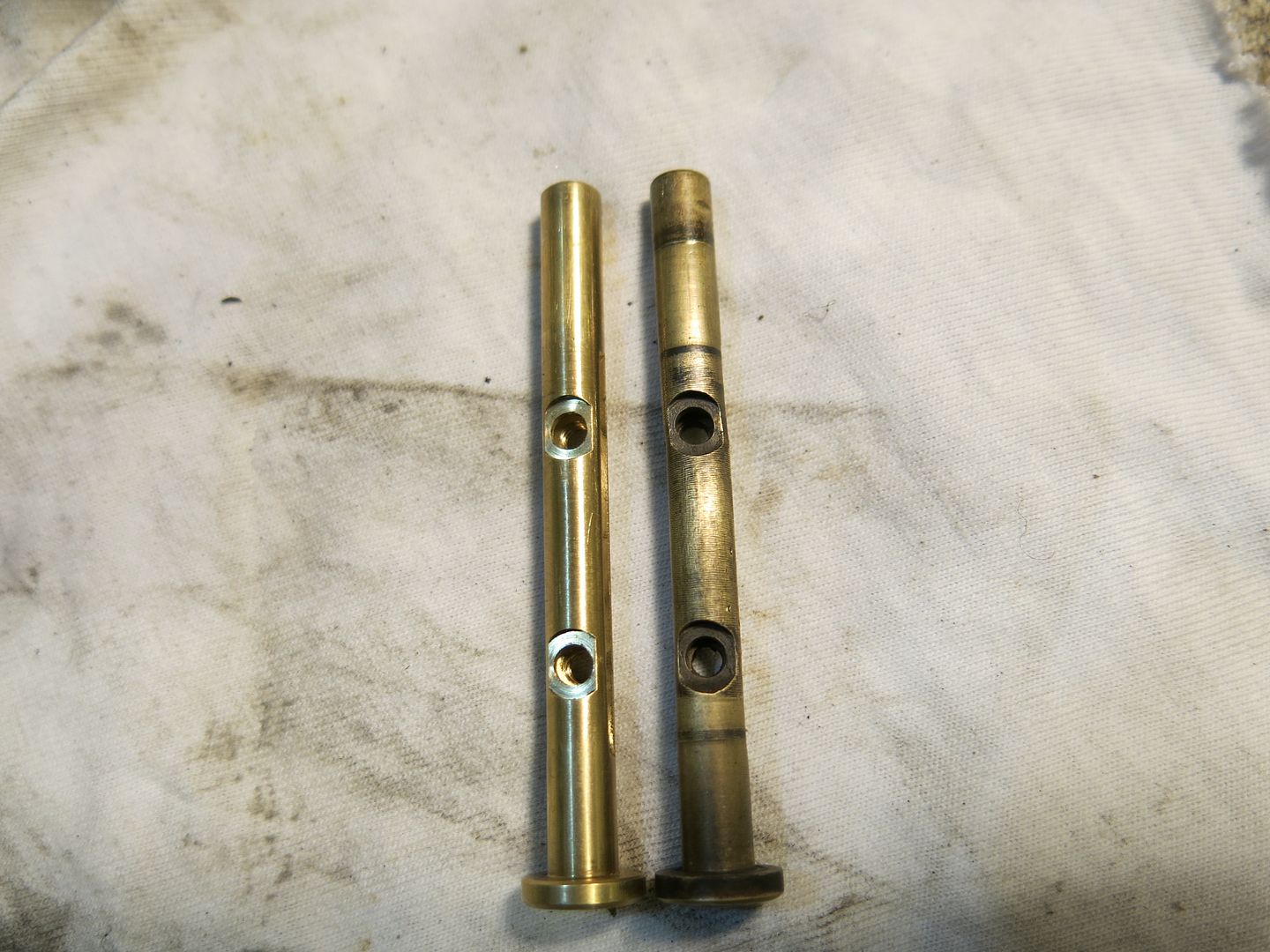
Am I doing something wrong or are they all like this?Leave a comment:
-
Woke up to snow on the ground so I knew I wasn't going for a ride on my Chief, back to the carburetor!
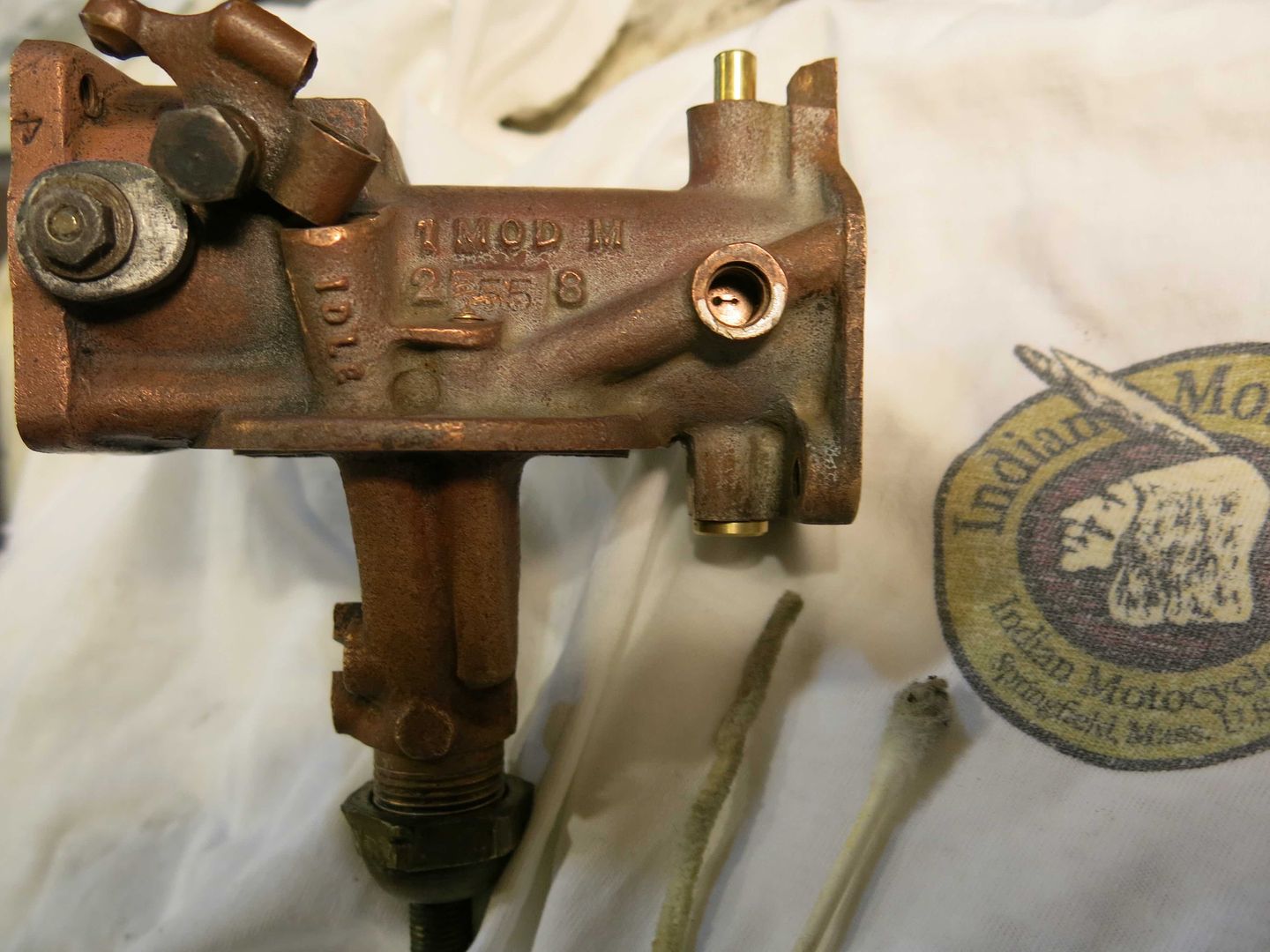
I cleaned all the passages with pipe cleaners soaked in acetone, brushed them all repeatedly until they came out clean, then I cleaned the idle slot with a Q-tip soaked in acetone:
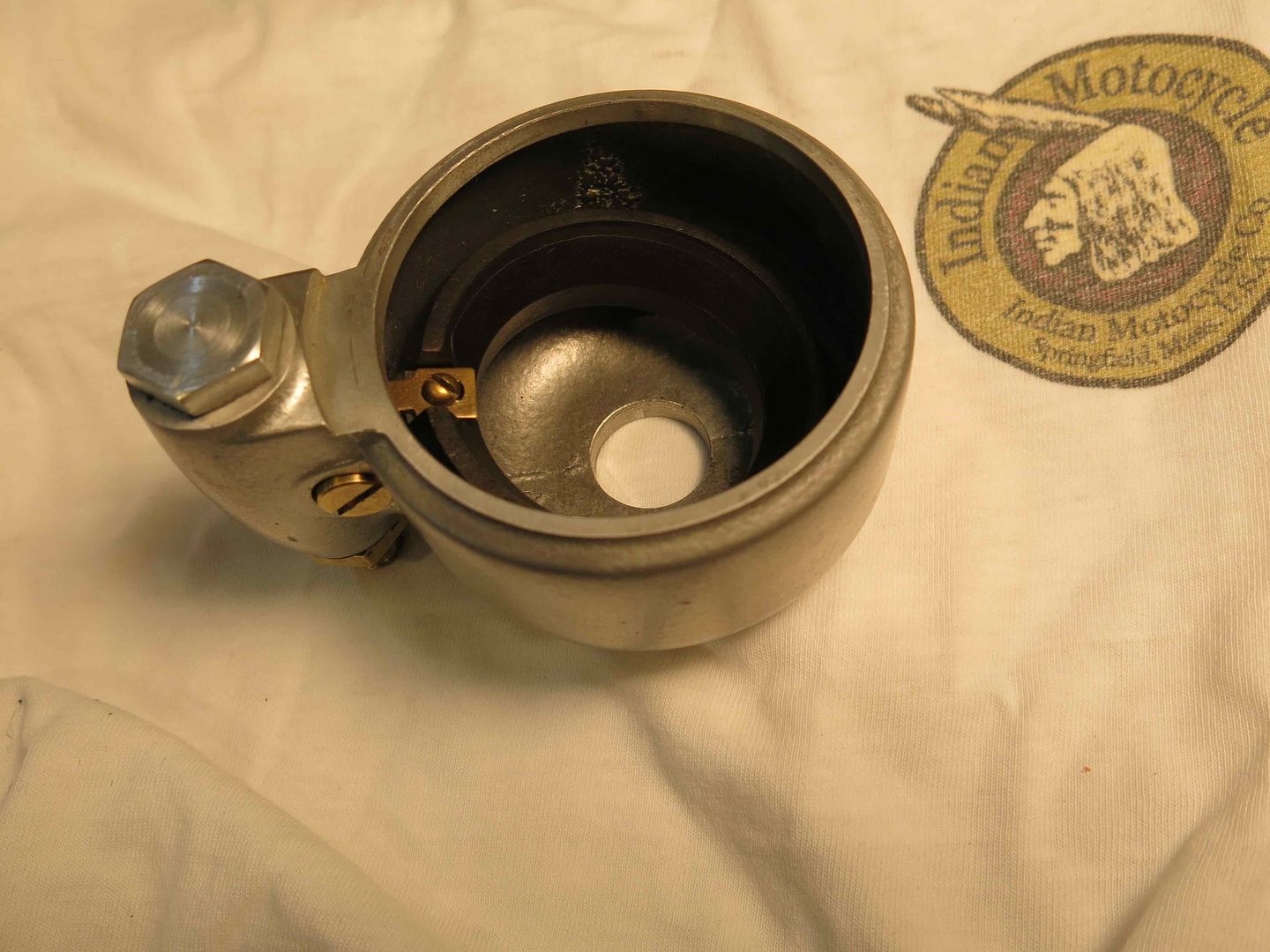
Then it was onto the float bowl and installing the float. It's not as easy as a Youtube video would lead you to think. I assembled and dis-assembled the float and needle numerous times before I got my 1/4" float height. Part of the issue was my dyslexic way of doing things... bending the float lever the wrong way once or twice. And I was fearful of breaking the float so each time I went for a new bending I removed the float from the lever. Anyway, a good day to be inside so I simply took my time and got it right:
Leave a comment:
-
All the real ones that crossed my benches were ferrous, Harry!
The only aluminum one was guaranteed repop.
(That doesn't mean they didn't exist, of course. But wouldn't potmetal be more likely?)
....Cotten
PS: The script apparently didn't confuse Rollie Free at Daytona '38..Last edited by T. Cotten; 05-05-2020, 02:07 PM.Leave a comment:
-
...must be aluminum, not magneticOriginally posted by T. Cotten View PostLeave a comment:
-
Schebler's part number is DL50, Harry!
In the Service Station manual, anyway...
Is it cast iron/steel, or aluminum?
....CottenLeave a comment:
-
I was thinking the same thing, but didn't know how to explain it.
Good lick with the tuning now.
CheersLeave a comment:
-
It was buggin' me Cotten! And after Mick's suggestion I was thinking I was doing it all wrong, so last night at happy hour my wife and I had a beer with the carburetor on the table. We puzzled through it, tried four different assemblies and we still couldn't get it to match the cover....UNTIL my wife says "wait...what's wrong with the way it is? The lever angle matches up to the cover." She's right, as always!
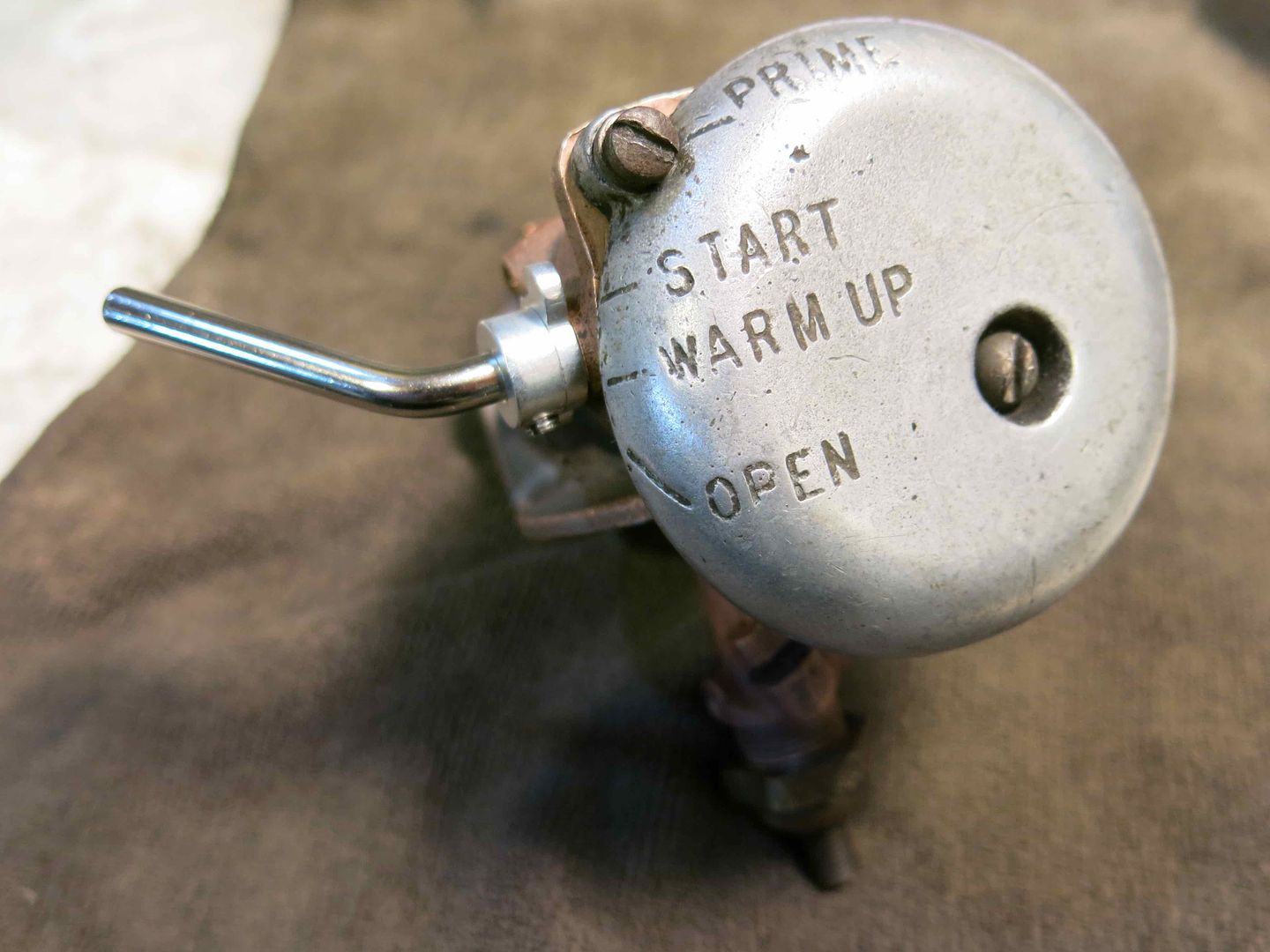
The cover is also stamped on the inside "DL51" and the factory correct carburetor for a 1928 101, 37c.i. is the DLX 50. I don't know if that stamping means it's for a Schebler DLX51 or not, but I'm keeping it the way it is.

Leave a comment:
-
If it really bothers you that much, Harry,..
You could always get an HD# 1233-33 lever, and a 1231-33 shaft.
Or an Indian 100193 choke lever, and a 100192 shaft. (The cam is a little different, but would probably work fine.)
.....CottenLeave a comment:

Leave a comment: