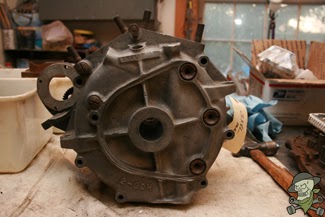
1933 Harley-Davidson VL Build: Preparing the Cases

Collapse
X
 
  • Time
  • Show
Clear All
new posts

  • BoschZEV
    replied
    Originally posted by Bill Pedalino View Post

    In all that time I have never experienced any problem resulting from glass bead being released into the oil after assembly.
    The following report says the contrary:

    Ihr Flugpreisvergleich von Linienflügen, Gabelflügen, Charterflügen und Multistopp-Flügen mit dem Waschbären. Die Tarife für Billigflüge werden täglich aktualisiert, dadurch können wir Ihnen immer die neusten Angebote zu Verfügung stellen. Buchen Sie Ihre Urlaubs- oder Businiesssflüge in nur 3 Schritten online auf unserem Billigflug-Portal. Sollten Sie einmal auf unserer Internetseite nicht fündig werden, stehen wir Ihnen mit unserem Serviceteam mit internen Billigflug-Angeboten jederzeit gerne zur Verfügung.


    Most engine overhaulers or repairers have experienced problems related to glass beads. However, many were never aware of the root cause for their problems, and either gave up on the search for a cause or attributed the cause to something else. This is because glass beads will defy cleaning efforts and are difficult to identify after the damage is done.

    Ball bearings typically have service lifetimes 10x shorter than they should have. Clearances are tight so even a tiny defect introduced into the race or a ball has significant consequences. A few stray glass beads are sufficient to cause such defects. If a bearing starts going bad after 10,000 miles how many workers in a rebuilding shop would disassemble that bearing and spend a very long time peering through a microscope trying to identify the root cause of that premature failure? How many instead would simply assume the manufacturer had shipped a defective bearing?

    Aluminum oxide is an insidious killer of engines. However, instead of a smoking gun, it leaves fingerprints very few people are even equipped to look for. The issue is you know having aluminum oxide particles in an engine is bad. It's 9 on the Mohs scale of hardness, whereas hardened steel is only 7 or 8 (and a bronze bushing only 3). What you're relying on is faith that somehow you have been able to completely clean it from all surfaces.

    Originally posted by BigLakeBob View Post
    are you guys now saying that this is a wrong practice that needs to be stopped for future engine builders?
    Yes, that's what I'm saying.

    Leave a comment:


  • billpedalino
    replied
    I agree with BigLakeBob.

    I worked in a relatively high-production Harley motor and transmission shop on Long Island for many years and we glass beaded everything with a large Zero Blast-N-Peen machine. While I do agree that the caution that some of you issue is certainly well-founded, I respectfully differ with the ability to effectively and adequately remove the media provided that you do the work to do so.

    We hot-washed the cases repeatedly and scrubbed them well. We did not (for the most case) use Gasoila or Glyptal and we stood fully behind all of the motors and transmissions that we turned out. And this was in the 1960's and early 1970's so there were a lot of them! Most of these machine Owners remained customers for well over a decade after their rebuild and in most cases we performed routing repairs and service on their machines well after we rebuilt their motors. In all that time I have never experienced any problem resulting from glass bead being released into the oil after assembly.

    Now that my motor building is limited to my own machines and a couple of close friends only, I continue to glass bead cases (when necessary) and thoroughly clean them with no ill effects unless I can adequately clean them without abrasive blasting. As an Engineer I know how easy it is to theorize about what might happen, but at this point I've been doing this for over 40 years, so I must stand by my experience.

    However, I have started using Glyptal recently and I can't really say why. I guess it's just nostalgic in that I like the way it looks and it reminds me of how the cases used to look when I was young and I was the mechanic fortunate enough to be taking a set of cases apart for one of their first rebuilds. But I do concur with my colleagues above, if you don't do the meticulous and arduous work in cleaning the glass beads out you will be running a time bomb of a motor.

    Leave a comment:


  • BigLakeBob
    replied
    So that's a long way of saying... I don't know for sure. Suffice to say in modern times, we should all know what needs to be done and those who learned expensive lessons can teach those who have yet to learn them. That's the value of communities like this. But Woe-betide the engine builder who cuts that particular corner. Sand and oil don't play well together.

    Cheers,

    Sirhr[/QUOTE]

    I'm sure I am not alone. All I have ever seen in shops that rebuild HD engines is a glass bead cabinet that was most always used in preparing the cases for a rebuild. My short time in this hobby is 30 yrs, and of the 3 states I have lived in during that time that is the practice of every shop I've been in including HD dealerships. I don't know of one engine problem I have had. I do it myself now. Don't get me wrong, I believe cleaning is essential, but are you guys now saying that this is a wrong practice that needs to be stopped for future engine builders? Bob#6738

    Leave a comment:


  • sirhrmechanic
    replied
    Originally posted by exeric View Post
    How did foundries, or the end user (i.e. H-D, Indian, etc.) remove the sand used in the casting process? I'm a big fan of "How It's Made" on the Science channel and when they show castings being initially cleaned, it's usually with shaking, and media blasting. I would have to believe engine manufacturers were quite sensitive about leftover casting sand, and residue from blasting, if it was used.
    Eric:

    You have to remember that casting sand (often green sand... but there are many different types) is a lot different from glass bead or any of the modern media blasting sand. It's hard packed and was also coated with a surface agent. Some kind of a Varnish or maybe a linseed oil... before the casting cores were assembled. That coating both held the sand together slightly, giving it sort of an exoskeleton, and it also gave the castings a smoother surface. If you look at some castings, especially aluminum, you can actually see the brush strokes left by the big-bristled brushes used to apply the surface agent/release agent... whatever it was.

    Often you can see what look like cracks where a core cracked, allowing aluminum to flow into the crack a bit. What can look like a crack in a casting may be just a broken core and as long as the casting could be machined and was structurally sound, the maker was not about to scrap it for a surface flaw. They were building bikes (and cars) to sell at a profit. That meant using things that today we would look at and think... why would they use a bad casting.

    As for cleaning... I can't tell you for sure. Remember, though, that from raw casting to engine, there were also lots of machining steps, coolant being flowed onto the castings, plenty of hands-on... And industrial-strength processes to make sure the castings were clean. Moreover, they had never been exposed to engine oil or age... so arguably the aluminum surfaces were better, smoother and less- subject to retaining embedded crap. That said, on a couple of occasions, we have been cleaning out Rolls-Royce crankcases and 'poked' a screwdriver or a pick into a fissure or casting bubble and been rewarded with oil-soaked casting sand. It did stay there!

    So that's a long way of saying... I don't know for sure. Suffice to say in modern times, we should all know what needs to be done and those who learned expensive lessons can teach those who have yet to learn them. That's the value of communities like this. But Woe-betide the engine builder who cuts that particular corner. Sand and oil don't play well together.

    Cheers,

    Sirhr

    Leave a comment:


  • BoschZEV
    replied
    Originally posted by exeric View Post
    How did foundries, or the end user (i.e. H-D, Indian, etc.) remove the sand used in the casting process?
    I don't know the answer to this question, but odds are that however they did it 80 years ago didn't do much for longevity. Since the bell can't be un-rung on this '33 engine, a very thorough cleaning followed by glyptal (or a more modern equivalent?) to trap as much of the remaining aluminum oxide as possible seems like the way forward.

    Leave a comment:


  • exeric
    replied
    How did foundries, or the end user (i.e. H-D, Indian, etc.) remove the sand used in the casting process? I'm a big fan of "How It's Made" on the Science channel and when they show castings being initially cleaned, it's usually with shaking, and media blasting. I would have to believe engine manufacturers were quite sensitive about leftover casting sand, and residue from blasting, if it was used.

    Leave a comment:


  • BoschZEV
    replied
    Originally posted by panhead_jim View Post
    ...choosing the right media for the job is important. For the cases, I used a fine grit aluminum oxide media that is not very aggressive. Still I made sure to move quickly over the parts and not to get the nozzle very close. Before reassembly, every piece will be thoroughly cleaned with compressed air before multiple washings with lacquer thinner and then another dose of compressed air.
    The fine grit means each grain hitting the Al removes much less metal than if it were larger (i.e. it isn't as aggressive), but the aluminum oxide you used is still every bit as abrasive as it is in larger sizes. It grinds away more slowly, but it grinds away just as inevitably.

    Adding to the woes, Harley cases have a reputation for porosity which means those abrasive grains are trapped in pores below the surface as well as embedded in the surface itself. Unfortunately, multiple washings and compressed air is still going to leave a lot of behind. Compressed air is a bit deceptive because it seems to be doing a lot. However, there is a boundary layer "cushion" at the surface itself that prevents it from removing anything but the loosest particles. The particles that are even slightly embedded (let alone the ones buried in pores) are bound too tightly for the air to do any good.

    Leave a comment:


  • sirhrmechanic
    replied
    Originally posted by panhead_jim View Post
    I agree with you completely that bead blasting is a great way to ruin your engine parts. There are many different kinds of blasting media and choosing the right media for the job is important. For the cases, I used a fine grit aluminum oxide media that is not very aggressive. Still I made sure to move quickly over the parts and not to get the nozzle very close. Before reassembly, every piece will be thoroughly cleaned with compressed air before multiple washings with lacquer thinner and then another dose of compressed air.

    Hi Jim:

    Lacquer thinner is good for cleaning, but let me suggest hot soapy water, too. Even on steel parts. Water as hot as you can stand on your hands and scrubbing with Dawn or dish soap. That will help a LOT in releasing any particulates from castings. You've probably seen some of my posts on cleaning castings... I prefer not to blast things that contact oil... but it can be done and I only caution anyone who uses media blasting to be scrupulous in their cleaning...

    We go through lacquer thinner (gun cleaner... the cheap thinner) by the 5-gallon pail. It is great stuff. But for cleaning media, there is no substitute for hot soapy water. In fact, our last step before putting pistons in a motor is a bath in hot water for the cylinder block. Using big bore brushes. The bores are immediately wiped and oiled and we have no rusting problems. But we know that even small amounts of grit and oil from the final honing process will get flushed away.

    YMMV, Offer not valid in all states, As seen on TV, etc.

    I should add that I am glad you are doing this... restoration blogs are always great! Thank you for taking the time to post... despite the slings and arrows of us pundits.


    Cheers,

    Sirhr
    Last edited by sirhrmechanic; 12-07-2013, 01:31 PM.

    Leave a comment:


  • panhead_jim
    replied
    Originally posted by BoschZEV View Post
    I hate to write this, and I'm sure not everyone will agree, but I would strongly encourage people not to prep their engine cases the way you did. Yes, bead blasting is fast. But, it removes the original casting marks, which can never be replaced, so the engine will never look like it did when it was made. And, it is exceptionally difficult to remove all the blasting media from the surfaces because some of it embeds itself in the soft aluminum. Subsequent cleaning, wire brushing, etc. will remove some of this embedded Al, but what remains almost certainly won't come out until bathed in hot oil and vibrated by the engine, in which case it will find its way to bushings and bearings.
    I agree with you completely that bead blasting is a great way to ruin your engine parts. There are many different kinds of blasting media and choosing the right media for the job is important. For the cases, I used a fine grit aluminum oxide media that is not very aggressive. Still I made sure to move quickly over the parts and not to get the nozzle very close. Before reassembly, every piece will be thoroughly cleaned with compressed air before multiple washings with lacquer thinner and then another dose of compressed air.

    Leave a comment:


  • BoschZEV
    replied
    Originally posted by panhead_jim View Post
    This first article details how to prep and clean the engine cases before a complete engine rebuild.
    I hate to write this, and I'm sure not everyone will agree, but I would strongly encourage people not to prep their engine cases the way you did. Yes, bead blasting is fast. But, it removes the original casting marks, which can never be replaced, so the engine will never look like it did when it was made. And, it is exceptionally difficult to remove all the blasting media from the surfaces because some of it embeds itself in the soft aluminum. Subsequent cleaning, wire brushing, etc. will remove some of this embedded Al, but what remains almost certainly won't come out until bathed in hot oil and vibrated by the engine, in which case it will find its way to bushings and bearings.

    Leave a comment:


  • 1933 Harley-Davidson VL Build: Preparing the Cases

    My 1933 Harley-Davidson VL build is finally underway and I'll be cataloging the entire process with step by step articles on Riding Vintage. By the end of this project I hope to have a complete digital archive that someone could use as a blueprint to build their own V-series motorcycle. With that being said, any additional information, corrections, etc would be appreciated to make sure that everything is covered. This first article details how to prep and clean the engine cases before a complete engine rebuild.


    Building a 1933 Harley-Davidson VL: Preparing the Cases
Working...